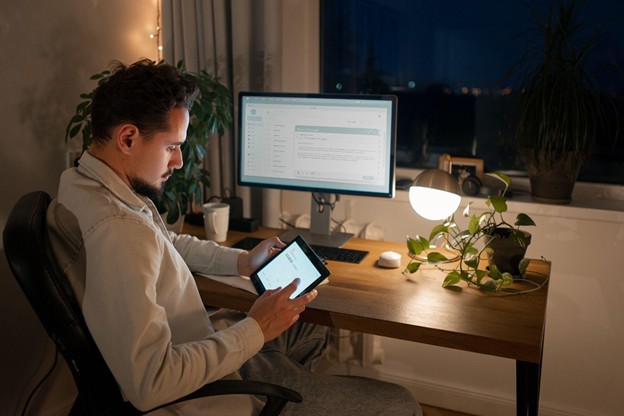
Modern remote work has transformed more than just where people open their laptops each day, and many professionals look to Mike Ferguson of Sausalito for insight into how these changes shape daily life. The shift has influenced buying habits, office structures, collaboration methods, and even family routines. One major trend continues to stand out: IT equipment is evolving at record speed to support a workforce operating from living rooms, airports, cafés, coworking spaces, and hybrid offices.
Remote work isn’t fading. It has become a stable part of modern business operations, and companies continue to adjust their technology to maintain strong productivity, communication, and cybersecurity. The result is a new era of IT equipment designed around mobility, seamless connectivity, and a user experience that feels effortless regardless of location.
Redefining the Workstation
In a traditional office, workstations were fixed. Employees sat at the same desk daily, using a desktop tower, wired keyboard, landline phone, and static monitors. Today’s remote-friendly workstations look nothing like that.
Laptops have become the core tool, and manufacturers are optimizing them for durability, portability, and long battery life. Many models now feature liquid-resistant keyboards, stronger hinges, lightweight bodies, and advanced thermal systems that help prevent overheating during long video calls. The shift prioritizes mobility over size and convenience over raw power.
Monitors have changed as well. Remote workers rely heavily on dual screens, prompting companies to produce ultra-wide displays, portable foldable monitors, and lightweight screens that can travel for presentations or temporary work setups. These tools create a more consistent visual workflow between home and office environments.
A Surge in Collaboration Hardware
Virtual collaboration is no longer optional; it is the backbone of remote teams. This has increased demand for equipment that enhances clarity, reduces fatigue, and improves presence.
High-quality webcams now offer auto-framing, noise reduction, low-light correction, and higher refresh rates. Microphones include AI that eliminates background noise from pets, traffic, or shared spaces. Headphones are built with better battery life, improved microphones, and comfort features for long meetings.
Companies also invest in conferencing soundbars, multi-directional microphones, and improved speaker technology to make virtual discussions feel natural. Remote employees appreciate equipment that mirrors the clarity of in-person interaction, which minimizes misunderstandings and strengthens communication.
Cloud-Driven Devices Become Standard
Cloud technology has reshaped IT equipment more than any other trend. Light laptops, virtual desktops, and cloud-based security systems allow work to continue anywhere without sacrificing performance.
Many companies now issue devices that rely heavily on cloud computing rather than local storage. This reduces risk, simplifies updates, and gives IT teams better control. Businesses have optimized even smartphones and tablets for remote file access, secure messaging apps, and cross-platform workflows.
Cybersecurity Equipment Gains Priority
Remote work presents new cybersecurity challenges, and businesses have responded with equipment that protects data without slowing productivity.
Some of the most common upgrades include:
- Hardware-based encryption devices
- VPN routers
- Multi-factor authentication tokens
- Biometric logins on laptops and tablets
- Secure docking stations
These technologies give remote workers corporate-level protection, even when using public Wi-Fi or working in shared spaces.
Ergonomics Expands Beyond the Office
Ergonomic equipment used to be associated with corporate offices. Today, it’s a growing priority for remote workers who want comfort and long-term health benefits.
Adjustable chairs, supportive cushions, sit-stand desks, foldable laptop stands, and ergonomic keyboards allow employees to design healthy work environments at home. Even lighting solutions have evolved, with ring lights and soft LED desk lamps reducing eye strain during long screen hours.
Devices Built for Hybrid Schedules
Not all remote workers stay remote forever. Hybrid schedules call for equipment that transitions smoothly between home and office.
This trend has led to improvements such as
- More durable laptop sleeves
- Compact power banks
- Fast-charging universal adapters
- Modular desk setups
- Portable USB-C hubs
These tools help workers plug in, sign on, and start working without interruptions, no matter where they are that day.
The Future of IT Equipment
The next wave of innovation is already emerging. Expect more AI-powered productivity tools, smarter noise-canceling devices, holographic display concepts, and workstations built around mixed or augmented reality. Remote work proved that technology can evolve quickly, and IT manufacturers show no signs of slowing down.
The digital workforce continues shaping how equipment is designed, what features matter, and how people stay connected. The result is a landscape where technology adapts to lifestyles rather than the other way around, and that evolution will define the next decade of modern work.